|
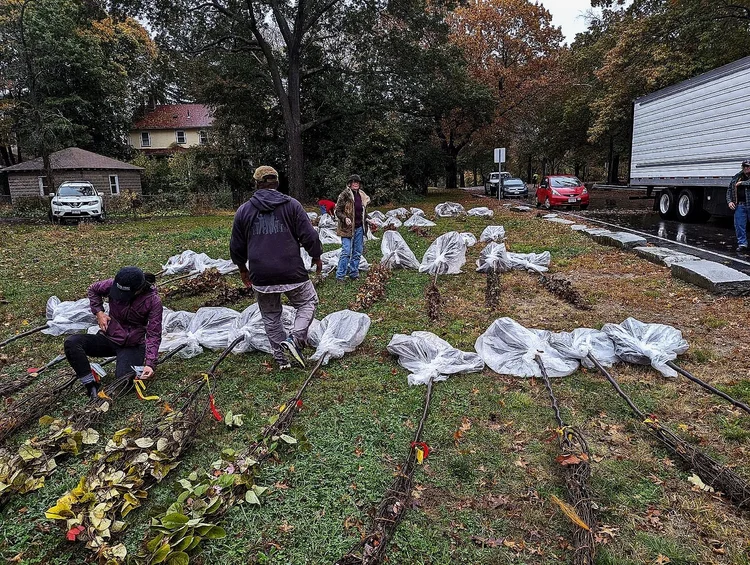
Grants - The grants that we have written are bearing fruit. Trees for the cemetery will be planted this fall, as will additional trees for many city parks. Our inventory is being used to develop Medford’s first Urban Forestry Management Plan, a huge step toward right-sizing Medford’s severely understaffed forestry department and developing goals for stabilizing our steadily diminishing tree canopy. An analysis of the data has revealed that Norway maple and Bradford pear predominate in our canopy, and these invasive species are starting to age out. While this represents a near-term severe loss of canopy, replanting behind those trees will give Medford an opportunity to diversify the urban forest. Medford needs to double its planting rate if we are to begin to stabilize the canopy. Memorial Grove - TreesMedford helped to modify a plan for the Memorial Grove initiative in Riverbend Park near the McGlynn Middle School. We are delighted that our concept is moving forward. The next step is to secure funding for plants and hardscaping. We look forward to the day when this restful spot for healing from losses during the pandemic and other difficult times is in place. Tree Ordinance - After 4 years of deliberation, the Medford City Council established the Medford Tree Committee on November 18, 2025, passing the first of three tree ordinances that were drafted by TreesMedford. We will be looking for volunteers who want to make a civic contribution to Medford’s tree canopy by sitting on the Committee. We plan to move forward on ordinances to protect trees on public and on private property. Pocket Forest - Planning is underway to develop Medford’s first pocket forest. A pocket forest is an intensely planted area of native trees and shrubs that grows quickly into a small, shaded forest, cooling the neighborhood and creating habitat in a very small space. TreesMedford has started this initiative to address urban heat islands and restore local biodiversity. Pocket forests are being developed in many urban areas in order to transform underused land into living green infrastructure. In 2025, TreesMedford worked with the City to identify a suitable pilot site on city land and refine criteria such as visibility, water access, and heat stress. We also began exploring potential locations on nearby DCR land for future plantings. At the same time, we have been exploring a partnership with Tufts University to support long-term monitoring of the site, engaging faculty and programs whose students can help track the mini-forest’s growth and ecological benefits. Opportunities exist to expand community engagement, especially with the Medford schools. Watering - Our increasingly hot, dry summers take a huge toll on the city’s trees. Of the 300 trees that the City has planted in the last 3 years, 60 have been ”adopted” and are getting regularly watered by our volunteers. We applaud the efforts of these hearty folks to keep the City’s trees alive, and wish we had enough volunteers to care for all young trees in the same way. Each dead tree increases the heat in our neighborhoods, reduces the property values of nearby houses, increases air pollution, increases the likelihood of flooded basements and exacerbates a host of other problems. It also wastes taxpayers’ money. Tabling and Outreach - Our booth at the six community events we attend each year has enabled us to reach hundreds of people with a message about the value of trees in Medford. The seedlings we give away will ultimately shade our neighborhoods and reduce the summer’s heat. Significant Trees of Medford - TreesMedford has also begun to collect nominations for the Significant Trees of Medford, which we hope will highlight the many beautiful trees we have throughout the City. We have more than 30 trees nominated so far and look forward to creating a map to showcase these amazing and resilient specimens.
|